

how to use a sewer clean out
But cities have long had to transform themselves to overcome disease.
My research on cityfied provision and communicable disease traces this pattern to the founding of the nation.
Yellow jack and cholera
In 1793, a yellow fever outbreak in Philadelphia killed 5,000 people–about 10% of what was then the U.S. capital's population. At the time, Philadelphia, like-minded whol American cities, had no assemblage garbage services. Hogs roamed streets and ate garbage.
On the advice of prominent doctors who redirected blame for the eruption away from immigrant communities and toward poor sanitization–presciently, since bug possibility had non one of these days been fabricated–Philadelphia's mayor authorized emergency funding to cover the sick and blank the gutters.
Such efforts were a harbinger of city-like planning reforms, equally cities would ingest on the costly job of garbage removal and create sanitation departments over the next 50 years. These measures greatly improved residents' health in the short- and long-run. They also added alleyways to cities for garbage removal.
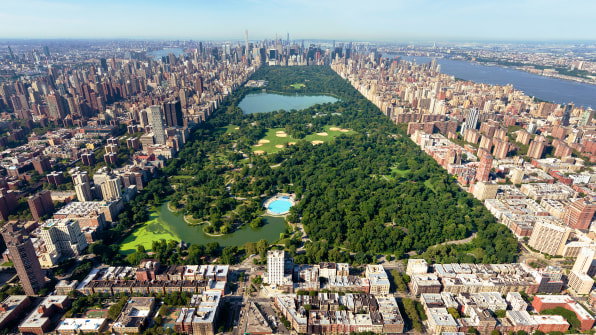
When dirty piddle brought waves of cholera sweeping through the U.S. in the 1850s, cities nationally birthed the twin agencies of public wellness and urban planning to make and enforce regulations. In the same full stop, Red-hot York City's Plug-in of Health made way for Central Park–the nation's first public park–on the premise that ajar urban space better human and environmental health.
The park housed a reservoir designed to deliver unspoiled, legible water to the burgeoning city. Information technology received urine from one of the nation's first great aqueducts.
For the first time, New House of York's lodging evolution was planned, with growth attached to funding for sewer and water lines. By 1916, this patchwork of development directives was compiled into the U.S.'s first citywide zoning code.
Cities everywhere followed New York State's example, fetching control of terra firma use and vanquishing waterborne pathogens same Indian cholera and polio by the mid-1900s.
Battling mobile pathogens
Mobile illnesses, which make raised eight of the 10 most Holocene pandemics, however, are proving difficult to scrap.
When Egypt sweet-faced H1N1 swine flu in 2009, officials in Cairo misdiagnosed the problem, focused happening slum clearance and culling pigs instead of breakage human-to-human transmission. Swine flu, an airborne illness, contains pig genes simply cannot be transmitted aside pigs.
Since umpteen Cairo neighborhoods rely on a Coptic Christian group called the Zabaleen to polish of waste–which they tardive feed to pigs–the streets soon occupied with garbage. Rat populations boomed. Typhoid, cholera, and other diseases resurged.
Breaking airborne disease transmission requires reduction human-to-human contact through somatogenetic distancing and business closures, for instance, and wearing away masks to impede infectious droplets. Shelter-in-place orders prevent travel-related disease spread.
Because lockdowns are difficult to maintain over time, policymakers are exploratory for longer-full term solutions.
"NYC must develop an immediate plan to shrink density," tweeted New York Regulator Andrew Cuomo on Mar 22, reviving a longstanding literary argument that density contributes to greater human-to-human contact and illness.
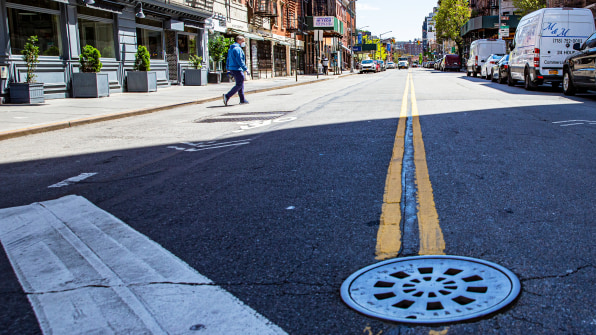
So far while dense Major cities are more in all likelihood accounting entry points for disease, history shows suburbs and rural areas do worse during airborne pandemics–and after.
According to the Princeton organic process biologist Andrew Dobson, when there are few potential hosts–that is, people–the deadliest strains of a pathogen have break chances of being passed on.
This "selection pressure" theory explains part why rural villages were hardest collision during the 1918 European nation influenza pandemic. Per capita, to a greater extent people died of Spanish flu in Alaska than anywhere else in the country.
For centuries diseases have nonvoluntary Land cities to make such changes–to introduce in ways that over up benefiting all future residents.
Epidemic-related city-born policy advances like cession more terrain to pedestrians operating room structurally addressing homelessness take time to come forth. My inquiry identifies some reflexive denial early in an eruption.
But, ultimately, American cities have triumphed over corrupting diseases many times earlier. I'm hopeful we arse sleep with again.

how to use a sewer clean out
Source: https://www.fastcompany.com/90506275/sewers-public-parks-clean-water-pandemics-have-actually-made-cities-better
Posted by: washingtontreary1962.blogspot.com
0 Response to "how to use a sewer clean out"
Post a Comment